People in Manufacturing: Skills, Training, Results, and Fair Bonuses
How Oprela helps manage people on the shop floor: a register of skills and qualifications, work allocation by competence, training plans, attendance, productivity, and quality metrics, and fact-based bonuses.
In custom manufacturing, the most scarce resource isn't machinery, but people with the right skills. A good welder, sheet metal bending machine setter, or complex assembly worker is indispensable, which is why it's crucial to know who can do what, who is growing, and who is burning out.
Oprela Manufacturing provides managers with a team overview built on facts from the shop floor.

Who Can Do What
Shop floor workforce is a register of employees with their skills, qualification levels, and pace. You can see how many people can weld stainless steel or set up a specific machine, and where the team is vulnerable: a skill possessed by only one person is a risk for the factory.
Work by Competencies
Work allocation considers skills. The system won't suggest a complex operation to a novice for which they are not qualified, and time estimates account for the specific person's pace. The foreman doesn't have to remember everyone's skills.
Training
The training plan shows who should be trained in what to address bottlenecks. Completed training updates skills, and the person gains access to new operations.
Results
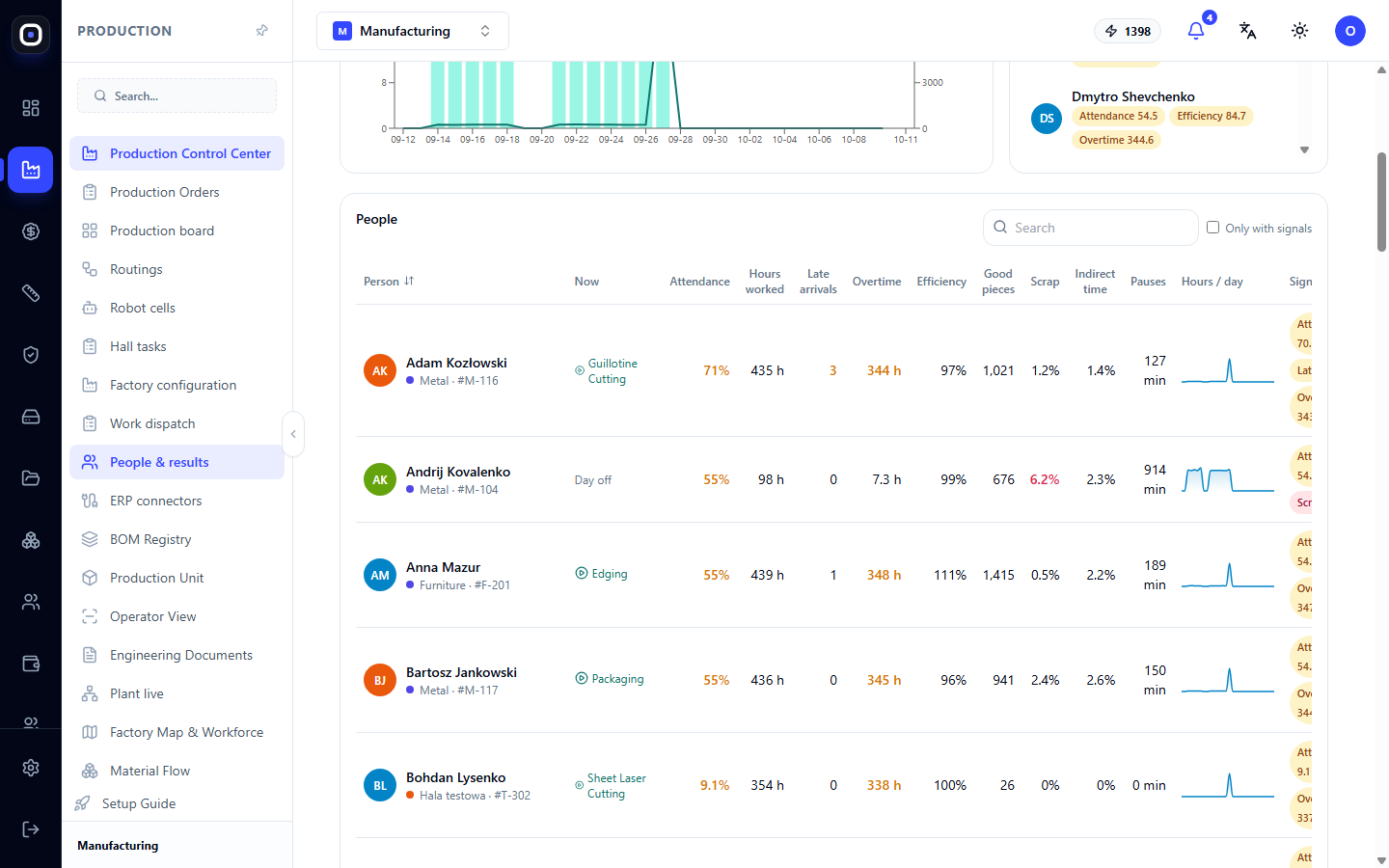
The People and Results page shows nine metrics compared to the previous period: attendance, hours worked, lateness, overtime, efficiency relative to standard hours, good parts, defects, indirect time, and pauses. "Needs attention" signals indicate who needs a conversation – for example, someone whose productivity has sharply dropped or whose overtime has increased.
Fair Bonuses
Bonuses based on a foreman's impression demotivate the best performers. In Oprela, bonus calculations rely on recorded data: completed operations, standards, and quality. Bonus rules are configurable, and the calculation is approved by the manager before payout.
Weekly Digest
The manager receives a brief weekly overview: what has changed in the team, who needs attention, and where problems are growing.
Important: This is Not Surveillance
Metrics exist to identify process problems, not to punish people. For example, low productivity often means a person is waiting for material or drawings – and the causes of delays show this. Personal data is only visible to those with authorized roles.
What the Factory Gains
- Less dependence on individual indispensable people.
- Work is allocated based on actual skills.
- Bonuses that people perceive as fair.
- People-related problems are identified before an employee leaves.